Jelly Fruit Merge
A good match still needs somewhere to land.
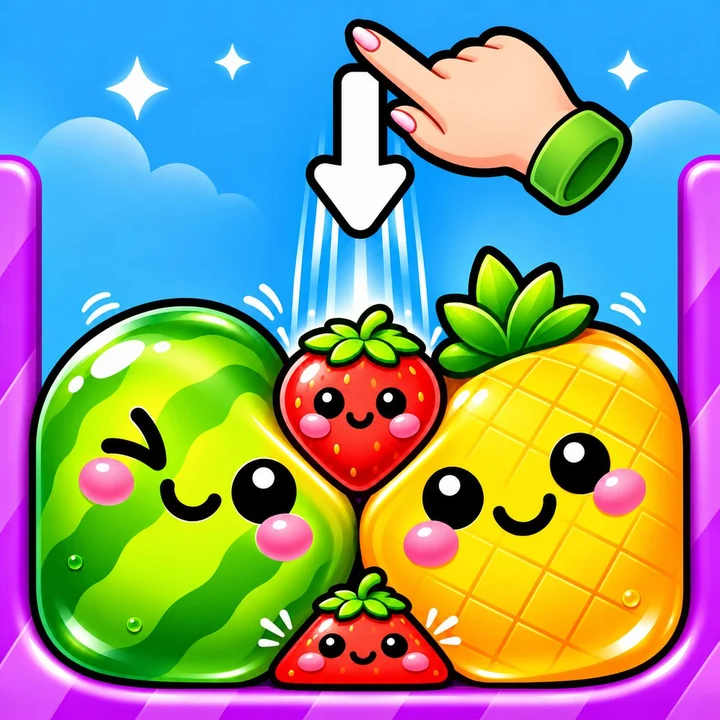
The fruit will not sit politely. Jelly Fruit Merge asks you to bring matching pieces together in a container, and the interesting decisions begin when a promising partner is visible but another piece keeps getting in the way.
Source · Poki ↗The game opens on its platform in a new tab. That service’s terms and privacy policy apply.Our choice for a puzzle you can read at your own pace
The visible space gives you something to reason about. We recommend it when you want a gentle-looking puzzle with meaningful placement decisions, because even a simple drop can make the following choice easier or leave it awkwardly buried.
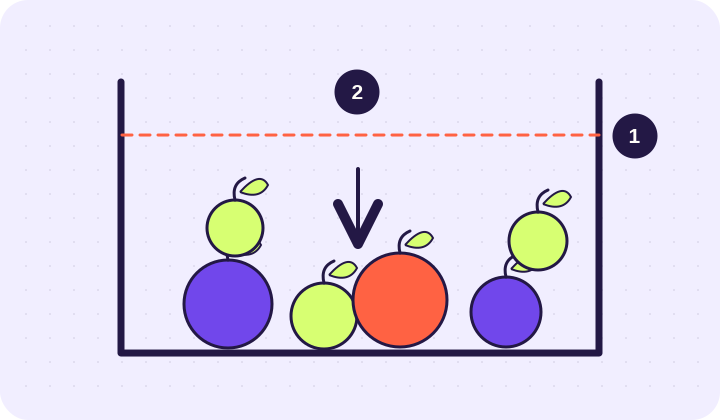
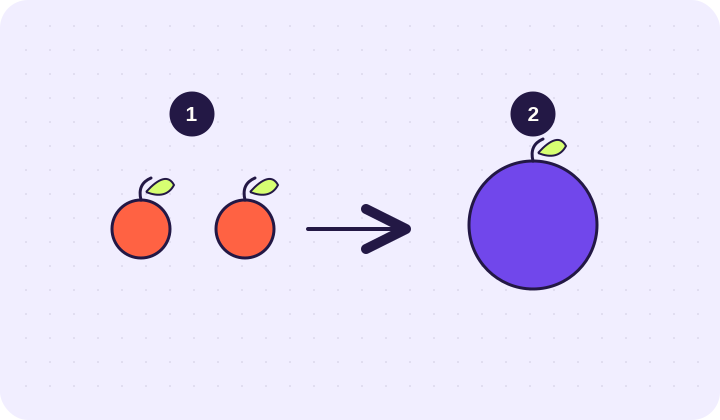 Editorial diagram, not a gameplay screenshot
Watch the landing before dropping another piece
Give the fruit time to settle. Aim near a reachable match, make one drop and watch the result before continuing, because the space you thought was open may look different once the other pieces have finished moving.
- Find a matching fruit that is reachable.
- Aim a drop without blocking the next useful space.
- Watch the bounce, then choose again.
- Devices
- Computer, phone and tablet, according to Poki.
- Controls
- Click or tap to drop a fruit.
- Session
- An ongoing container puzzle; the source does not promise a fixed session length.
- Cost
- Free on Poki; the platform displays advertising.
- Account
- The linked browser edition is on Poki; check its current account options.
The controls, within reach
- Mouse click
- Drop the fruit from the chosen position.
- Touchscreen tap
- Use the drop action on a phone or tablet.
- Matching contact
- Bring identical fruit together to create a larger piece.
A visible partner is not always an available partner
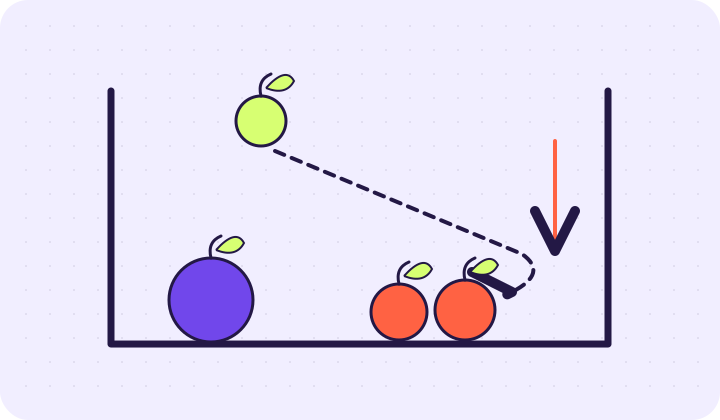
Check the path to the match. If another fruit sits between your drop and the piece you want, aiming at the same horizontal position may leave you with a new obstacle instead of the contact you expected.
Think about the shape of the pile. A tempting gap can be useful, but it can also make the next fruit harder to place, so compare the immediate match with the room your decision leaves afterward.
Let the movement tell you what changed
One drop can rearrange the picture. After a piece lands or a pair combines, take another look rather than sending the next fruit toward a spot you chose before the pile had finished moving.
Slow observation can beat fast commitment. You are trying to understand where a piece can reach, so the useful habit is checking the result of one decision instead of treating every available moment as a request to drop again.
Protect an option, not a perfect-looking stack
A neat pile is not the only goal. When choosing between two plausible places, consider which one leaves a useful route to an existing match, rather than judging the result only by how tidy it appears.
Keep a small amount of flexibility. Leaving somewhere practical for an awkward piece can be more helpful than filling every gap immediately, because a board with no comfortable next move may demand a risky choice later.
When a run goes sideways
Dropping onto a match that another fruit blocks
Follow the route downward. Before committing, look at the pieces between the dropping fruit and its partner, because being able to see the target does not mean your new piece can reach it.
Planning several drops against a moving pile
Update the plan after contact. Let one landing resolve and inspect what shifted, rather than continuing with a series of placements based on a shape that the first drop already changed.
Filling every small gap just because it exists
Ask what the gap does for you. If closing it removes the only comfortable place for a different piece, leaving that space available may be a more useful decision than making the pile look complete.
Does it fit your break?
You might like it if…
Choose it if you like visible spatial problems. It suits players who enjoy spotting a reachable pair, weighing two landing positions and changing a plan after the board moves, without needing a large set of controls.
Maybe skip it when…
It may frustrate a strict planner. If you want pieces to stay on fixed squares and every move to have an exact, immediate result, the bounce and shifting contacts here can feel less comfortable than a grid-based puzzle.
- The source confirms matching and bouncing fruit but does not document every collision detail. Treat placement suggestions as editorial ideas, not guaranteed solutions.
- A free browser edition can still include platform advertising. Check the game page for current loading and account behaviour.
- We do not promise automatic cross-device progress. Before switching devices, inspect the platform’s actual saving options instead of assuming the same pile will follow you.
A few things worth asking
Why did two similar-looking fruits fail to combine?
Check that they really match and touch. A nearby piece or a visible partner on the other side of an obstacle is not the same as contact, so look at what lies between them before dropping again.
Should I drop as quickly as possible?
There is no need to rush our suggested approach. Watch how one drop changes the pile and choose the next position from that new picture, rather than treating a fast sequence as a goal in itself.
Is it the same type of game as Candy Jump?
Both look colourful, but they ask different things. Candy Jump centres on the moment of an input, while this game gives you a container to inspect and asks where the next piece has a useful place to go.